Summer heat and sun
Texas summers are long, and the sun does damage even when the grill is not on. Covers fade and get brittle. Plastic parts, knobs and handles wear out faster. A dark grill sitting in full sun can get hot enough to be uncomfortable to touch long before you light it.
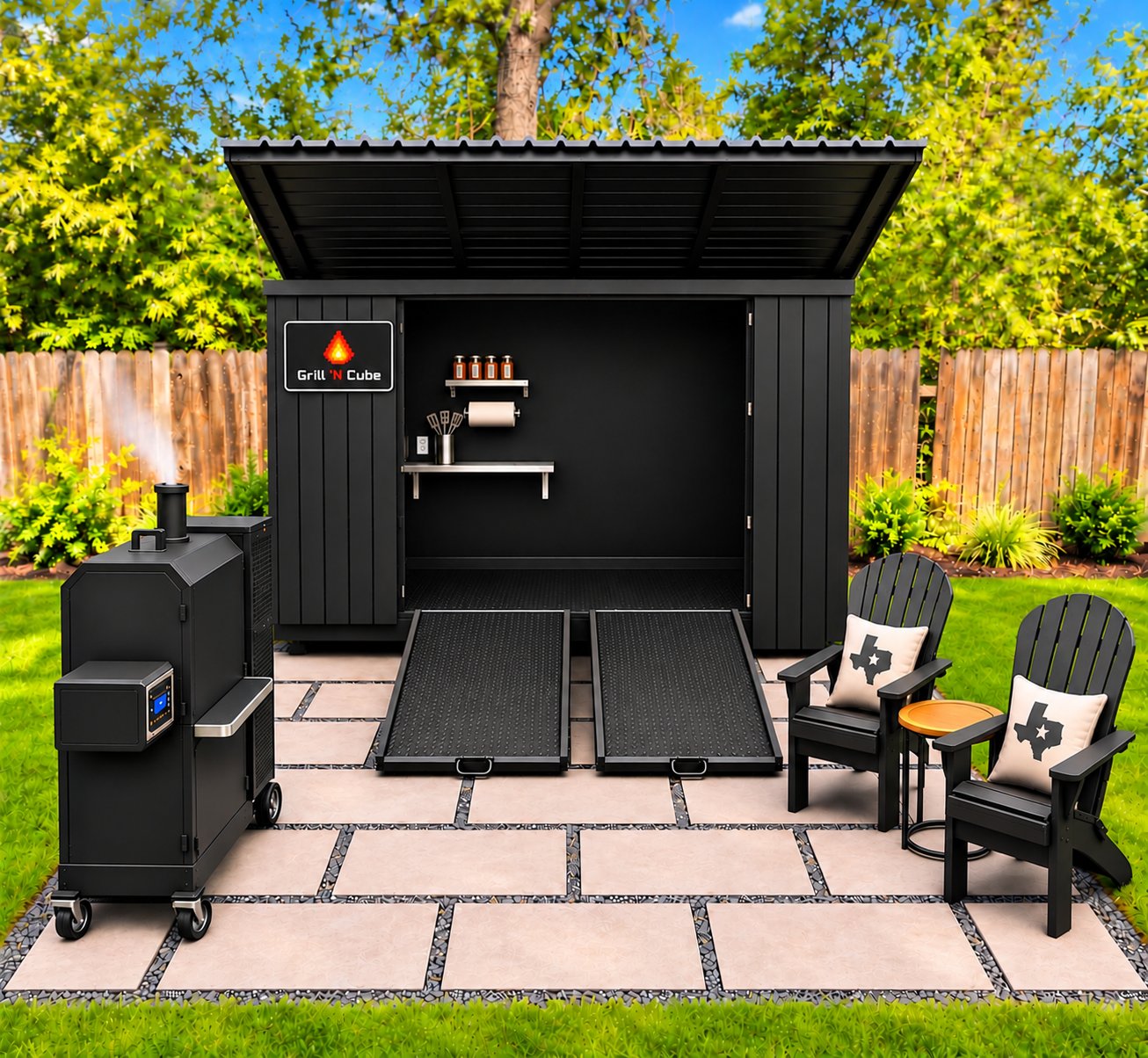
What helps: shade, a cover made for UV, or putting the grill away in a closed space when you are done cooking.
Humidity and rain
Moisture is the main cause of rust. Rain gets in, and so does humidity. A cover can even trap damp air against the metal if the grill goes under it wet or the cover is not breathable. Burners, grates and the inside of the firebox are the usual trouble spots.
What helps: let the grill cool and dry before covering it, use a breathable cover, and keep it off wet ground. A closed, ventilated space beats a cover that traps moisture.
Hail and storms
Central Texas gets hail and strong storms. A cover will not stop hail from denting a lid, and wind can knock over a grill or blow off a cover. Even a small storm can leave leaves, dirt and water in places you do not want them.
What helps: moving the grill out of the weather before a storm, or keeping it in something solid.
Surprise freezes
Freezes do not happen often here, so most of us are not ready for them. Water that gets into a grill can freeze and cause damage, and propane equipment is a good reason to be careful in cold snaps.
What helps: keeping the grill dry and sheltered before a freeze, and following your grill maker's guidance for cold weather and propane.